How do we become DevOps certified professionals (DCP)?

How do we become DevOps certified professionals (DCP)?
What is DevOps?

 To knowing DevOps. First, you have to understand DevOps. But today we are not going to put some definitions. Now we are willing to understand the whole concept of DevOps professionals. We are going to discuss every aspect of DevOps professionals. We have to understand the old days of software delivery. How you were consuming the software in old days. Actually, you were using multiple software in the back years like the 19th century includes 95, 97, and 98. Now, we are seeing many sorts of applications concerning delivering performance in new days. We have seen so many times of using applications by users through downloading and installation process.

Now, come to the point, we are talking about DevOps. The meaning of DevOps is development and operations collaboration which is done by software teams. By development of software. How it can redefine the whole automation of the software industry? It enhances your mindset for software development. There are many assumptions along with software operations. By the development of software. We take the following steps like manipulating software through engineers from one phase to another and by checking the functions of applications that are out to date and up to date.

What are the benefits of DevOps professionals?

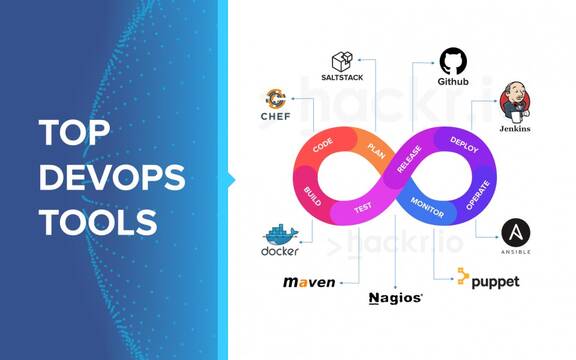
After looking at the term ‘DevOps’. DevOps is a very popular trend in the software industry.  Now, we are going to talk about the privileges or benefits of DevOps professionals. There are many sorts of benefits along with the DevOps software industry. Some of the main benefits associated as:
  • Release velocity: It helps in increasing the release velocity. We can release code for more production and with confidence.
  • Development cycle: Through it, the complete development cycle from initial design to production deployment becomes shorter.
  • Deployment rollback: In this field, we plan for any failure in deployment rollback due to an error in code or issue in production. This gives confidence in feature release without worry about the rollback in spare time.
  • Defect detection: With DevOps associates, we can catch defects much faster than releasing them to production. It simplifies the software quality.
  • Recovery from failure: In case of collapse, we can recover very fast with this process.
  • Collaboration: Through it, collaboration between development and operations professionals increases.
  • Performance-oriented: Through it, the entity follows performance-oriented culture in which teams become more productive and more innovative.

Why we should learn DevOps?

After learning the benefits of it. We are going to discuss the reasons why we learn DevOps? There are certainly reasons to learn about DevOps. It covers continuous software delivery, less complexity to manage, and faster resolution to problems in technical areas. In cultural areas, it handles the teams are more productive and happier, the employees are more engaging, and greater professional development opportunities. In business areas, it manages faster delivery time, improved communication and collaboration and more time to innovate, and greater customer experiences. With its exposure to trending technologies and advanced tools by DevOps certifications, you can increase your professional credibility.

How our DevOps course/ training would help?

Now, after getting the learning process. I will explain to you how DevOps courses/ training helps you make a software developer or software developer engineer from beginner to advanced level.it gives you knowledge- based on training or courses which will help you in the field of software development. DevOps gives you lots of popularity around the world. It skills huge demand and DevOps professionals are one of the highest-paid in the IT industry. If you become a DevOps engineer/ developer then it makes huge impacts on the sectors of IT. This is the recent situation in which you can get jobs as a DevOps engineer. Through this tutorial, I do assume that you will get all your answers to questions.    

How can we become Certified Jenkins Engineers (CJE)?

How can we become Certified Jenkins Engineers (CJE)?


What is a Jenkins?

Friends as you already know that software development is a very huge and heavy process. There are so many innumerable moving parts of it. In order to improve the development process, we utilize the methodology of DevOps and its tools. In DevOps, there are so many phases. This is one of the most favorable phases as continuous integration which is willing to help you in coming all together with the parts of software development and manages all of them. Therefore, there is a very popular tool named ‘Jenkins’.

 Jenkins is an open-source automation tool. Now, we will learn about continuous integration and using it in Jenkins. It is a phase of DevOps in which we are continuously doing integrate all of your software development processes in parts and take parts to combine all together. Well, we say combine but it actually controls through continuous integration.

What are the benefits of Jenkins?

Take a brief history of Jenkins. Jenkins was originally developed in 2004 by the sun microsystems company under the name Hudson. It had slowly gained popularity and had become one of the best developing tools out there. After this, the project was later named Jenkins when oracle bought microsystems and decided to keep Hudson & Jenkins as separate entities. It is now one of the most popular CI/CD tools in use out there. As we can see certain benefits are associated with:

  • Jenkins is a community tool – it's open-source and has a very large community that contributes to it regularly.
  • It's free so you don’t have to accrue any more subscription costs
  • Easy for the developers to find and fix issues.
  • Improves code quality, minimizes defects.

Why we should learn Jenkins?

After getting the benefits of Jenkins. Now, looking for the learning process. We are learning for using it. We use it for seeing widely use through DevOps team, build and release teams, and dev teams. Due to it provides feedback loop back to the developer and fix the errors. It developer has fresh in the memory for quick error. It can publish every build of your software and has already gone through automation testing. Further uses associates with this such as easy interface, easy to navigate, easy document and example, free and open-source, plugin and functionality, and users around the world.

How our Jenkins course/training would help?

Through the course tutorial, we get intact knowledge and practices that help you in working along with the Jenkins. It allows you to create build jobs on certain kinds of projects such as freestyle projects, pipelines, multi-configuration projects, multi-branch pipelines, folders, and GitHub organizations. After this we are getting benefitted from tutorials in two items, one is the Jenkins freestyle job it comes under many configures as general, source code management, build triggers, build environment, build, and post-build actions. Another is the pipeline, it comes with certain stages as CI/CD pipeline, Jenkins file, and Jenkins pipeline. I hope this will make you clearer to understand about the tool, their automation process, and software development process connections with different phases by using different plugins depending upon your needs.        

How do we become an Elastic Certified Analyst?


What is an Elastic certified Analyst?

Now, you will hear about the degree, diploma and certification on the basis of courses which you will be doing so many times. Let’s take a look elastic certified analyst it is one of the certification course in which analyzing data with kibana on the basis of searching data, visualizing data and analyzing data. This will give the information about the elastic search in terms of data. There is a simple task which is perform as a converting text into token or terms. Analysis is performed by Analyzer, tokenizer, token filter and character filter.

What are the benefits of an Elastic certified Analyst?

Through the process of elastic search on the basis of analysis. It plays a crucial role in the functionality properties performing as the analyst. There is so many significant benefits among all the elastic search stack in such a way:


  • Query and analyze structured data.
  •  Analyze application logs and system metrics
  •   Application performance management
  •   Send events to elastic search
  • Excellent at analyzing lots of data
  •   Forecast future values with machine learning
  •   Elastic search can be used for many different things


Why we should learn an Elastic certified Analyst?

Now it’s a while to raise query on the learning path. Why its necessity to learn. There are so many sorts of courses and tutorials according to which we can acquire sudden hike in the process of elastic search engine. To getting the growth in the elastic search series stack. It will eager you all analyzer in the chances of certification and aware about the how to using it? This courses will make you analyst for daily machine learning programs.

How our Elastic certified Analyst course/training would help?


This training tutorial will make you fast and advance in the elastic stack course. Through this it will clear your all assumptions about analysis program, searching data, and certifications. The most common phenomena is about that you can design your own goal career and achieve as you want. This will also give you along with certification along with job opportunity in the IT entity or organizations.

How do we become an Observability Certified Professional (OCP)?


What is Observability?

Today we’re going to be talking about observability, so let’s start with a definition. So observability is a property of your system's software that helps you understand what’s going on with them, monitor what they’re doing. To achieve observability, you should have visibility into system software and applications then it is classified into three tiers on the basis of performances credibility as logging, metrics, and monitoring. On the account of observability, it performs a certain action as a part of diagnostic data with the help of logging, traces the matrices, and monitoring the whole sorts of data into aggregator which collects from systems software’s, devices, and cloud server includes an operating system, after Kubernetes in which applications are running. After catching all logs data it is received by the developers and security on the process of fixing the bugs or errors for systematic performances of applications software.

What are the benefits of Observability?


Now, it’s a while to check out the benefits. There are some sorts of the beneficial situation on the basis of observability:-

  •  Monitoring
  • Alerting /visualization
  • Distributed systems tracing infrastructure
  •  Log Aggregation/analytics


Why we should learn Observability?

There is an awesome possibility with great impact in the case of observability. If you have software and you don’t know about the functioning series, you get opaque then how to detect or debugging the system property? With the helping hand of observability-certified professionals? You can diagnose all the logs, matrices, and monitoring and hands them over to the developer’s team. This course will help you to the functioning system well with certifications.


How our Observability course/training would help?

In this context, of course, training will make your expertise in the fields of observability. If you have your own system programs then this training will give you technological advances and awareness of the absorbing capabilities. Through this new concept, you can analyze your system software program. I wish this will more clarify your mind mapping and observing performances. After completing this course you get certification and makes you professionals.